What is 3D Concrete Printing?
Introduction
3D Concrete Printing (3DCP) is an emerging method of construction that uses industrial-scale (up to 100’ x 100’ x 40’) printers to place a concrete or mortar-based mix directly from a 3D modeled design. Instead of relying on traditional formwork and heavy manual labor, the printer extrudes the material layer-by-layer to form walls and structural components. This process is known as additive manufacturing. You build only what is needed, exactly where it is needed, with little to no excess. The materials used are engineered mixes that are typically concrete, mortar, or geopolymers designed to pump smoothly, hold their shape, and set quickly.
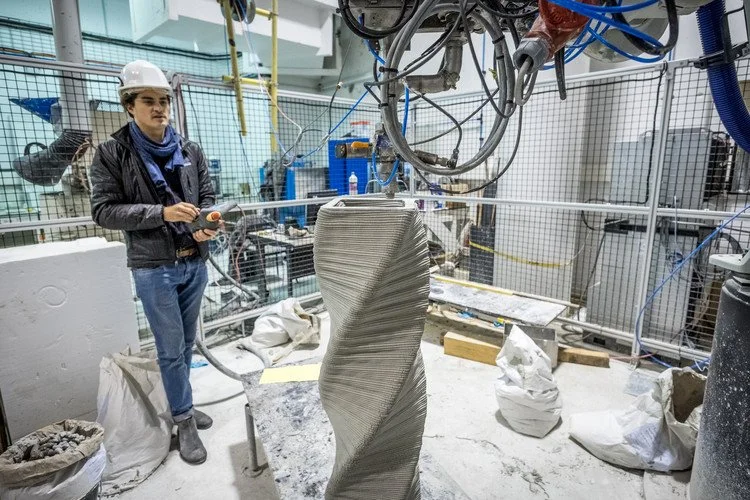
How it Works
The process of 3DCP starts inside of a specialized software to create a 3D design. That model is then ‘sliced’ into geometric pathways that the printer can follow as instructions. A specialized mix is prepared in a batch plant / mixing station and fed into the printer that pumps the material in controlled layers. As these layers build up, they form the desired structure. Once the walls or components are printed, reinforcement, services, roofing, insulation, and finishes are added to complete the structure. In short, it is a workflow that transforms digital information into physical buildings, shifting crews from heavy manual tasks to setup, monitoring, and quality control.
Why It Matters
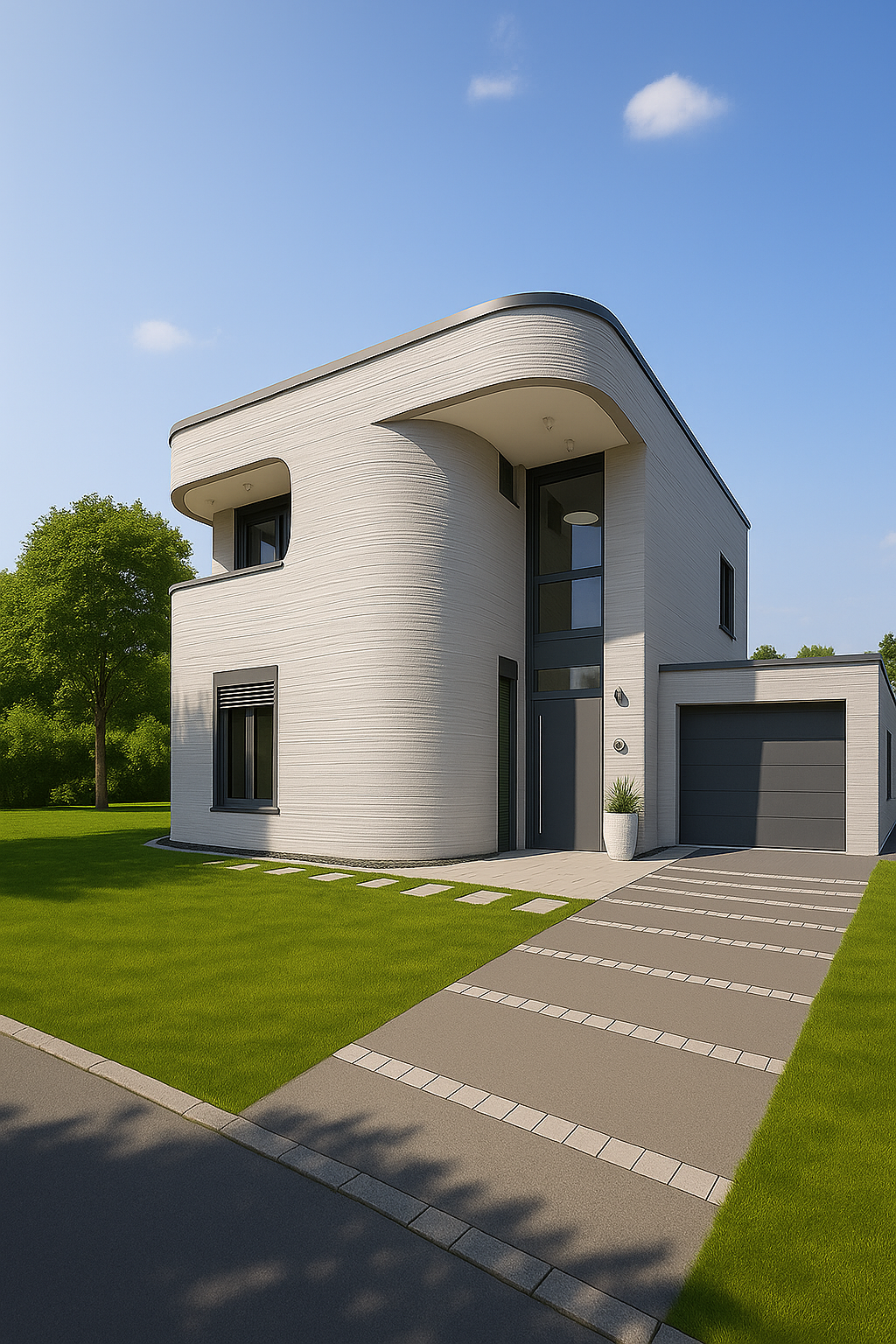
The value of 3DCP lies in the way it addresses longstanding challenges in construction. Waste is minimized in multiple ways. Non-concrete material, such as formwork, is eliminated in its entirety. Concrete material usage is reduced by understanding complex load-bearing analysis to create custom internal pathways, specific infills, and specialized reinforcement. It expands design possibilities, making curves and unique geometries achievable without increasing cost. Beyond design and efficiency, 3DCP also provides a critical solution to the industry’s diminishing workforce, reducing reliance on manual labor through professional automation and precision robotic talent. Taken together, these benefits allow projects to be delivered faster, cleaner, and with fewer bottlenecks than traditional methods.
What’s Being Built Today
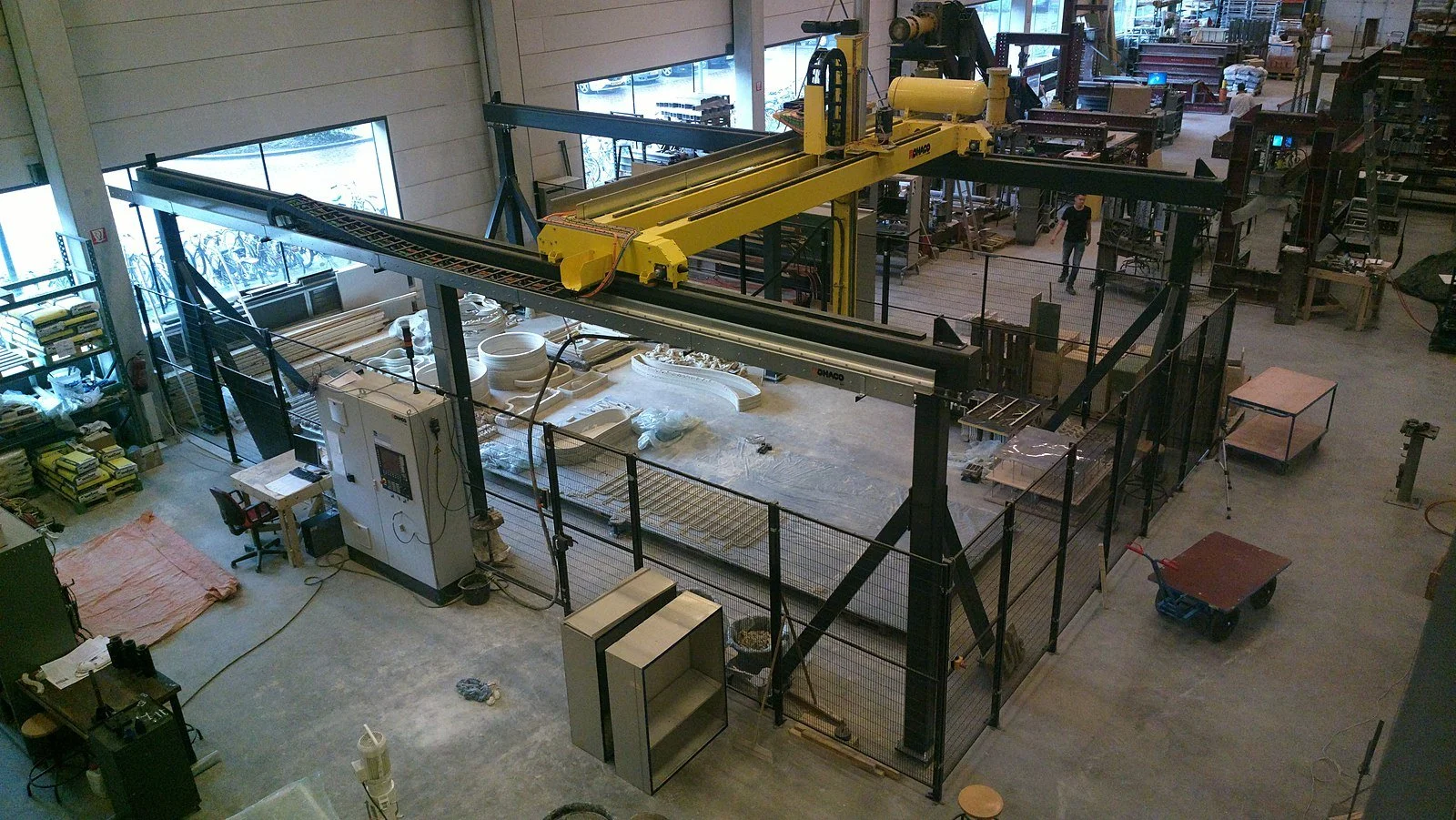
Around the world, 3DCP is rapidly transitioning from experimentation to large-scale application. Between 2020 and 2023, projects surged across four main regions: North America, East Asia, Europe, and the Middle East, accounting for roughly all 3D-printed buildings to date. Nearly half of these projects serve residential purposes, while others include exhibition, office, sanitary, and educational spaces. Most structures range between 20 and 250 square meters (approximately 200 to 2,700 square feet) and are printed directly on-site using gantry systems, though articulated and outrigger robots are also gaining traction. Collectively, these efforts reflect a global shift toward faster, more sustainable, and less labor-intensive construction.
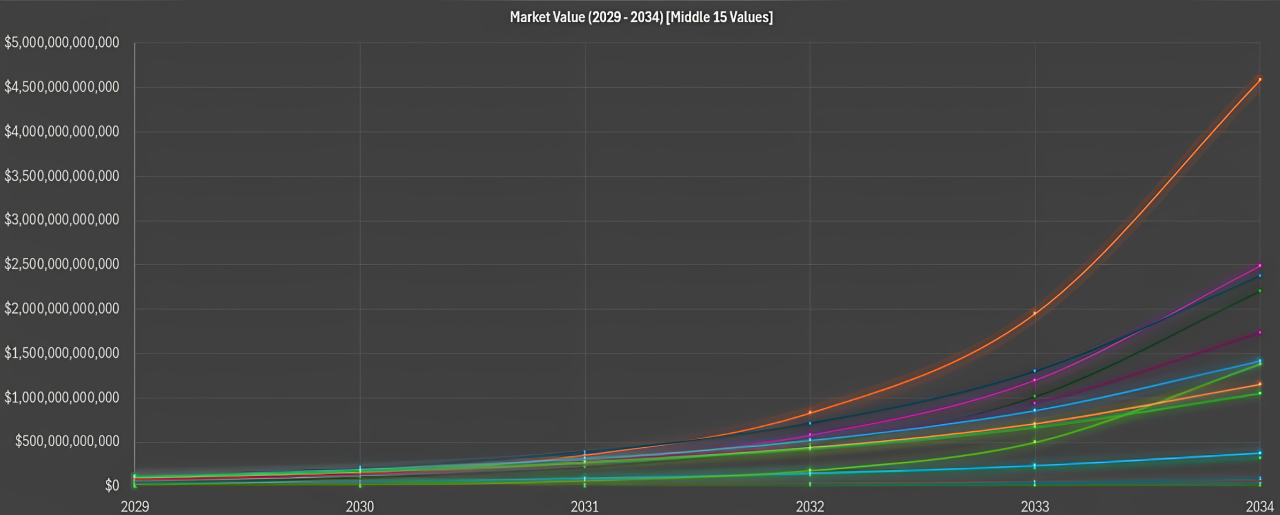
3DCP Market Value (2029 through 2034)
Where This Goes Next
Looking ahead, 3D Concrete Printing is positioned to become an extremely lucrative mainstream tool within construction rather than a niche experiment. As building codes, printer technology, and material science continue to improve, the industry can expect more repeatable, code-compliant projects and hybrid workflows where printed structures integrate with traditional systems. The real opportunity lies in using printing where it makes the biggest impact, speed, quality, and design flexibility, while blending it with established methods for everything else. For builders, developers, and communities, that means faster delivery, lower waste, and more creative options. For those exploring the possibilities, the key question is not if 3DCP will be used, but how and when.